


RedStone engaged Composable Security for a security review of their AVS oracle system to harden price delivery and reward mechanisms across both on-chain and off-chain components.
Basic Information
Project Type: AVS-based oracle system providing asset prices with off-chain validation to reduce on-chain gas consumption.
Service: AVS security review (smart contracts + off-chain components and integration security review).
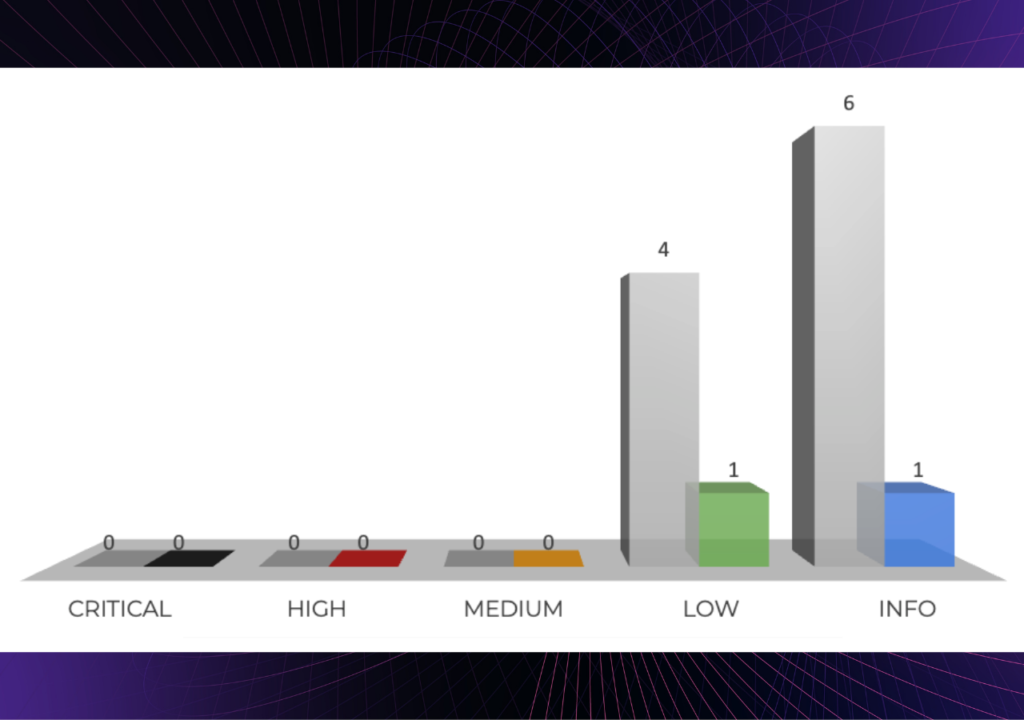
Results: Through our collaboration, 10 issues, including 4 low vulnerabilities and 6 recommendations, were successfully identified and resolved.
About the Client
RedStone is a blockchain oracle that supplies on-chain data feeds (including price feeds and some specialized asset feeds) to decentralized applications and blockchain networks across EVM and non-EVM ecosystems, using a modular architecture that separates data collection from data delivery.

Visit website: https://www.redstone.finance/
About the Service Scope
We were entrusted with reviewing the security of RedStone’s AVS with the goal of identifying realistic threats and hardening both the on-chain contract surface and critical off-chain components. The assessment was conducted over 1 person-week with 2 engineers, with a follow-up retest to verify remediation.
The subjects of the test were selected components from the RedStone AVS repository:
GitHub repository: https://github.com/redstone-finance/redstone-avs
CommitID:9b6771d9514b82a51de9ee5982ae432b381f0d26
Scope overview:
- Smart contracts security review: selected contracts under avs-contracts/contracts, focused on AvsPrice.sol.
- Off-chain components and integration security review: time reserved for examining the Task Performer, Validation API, and threats from potentially malicious Attesters and Aggregators.
- Out of scope: Othentic external dependencies.
Below is an overview of the system’s key components reviewed as part of the end-to-end threat surface:
- Oracle Gateway: collects data from oracle nodes.
- Task Performer: fetches data, verifies correctness/consistency/signing, computes median price and timestamp, checks deviation/time conditions, and forwards updates to the Aggregator.
- Aggregator: collects Attesters’ signed votes, aggregates them into a collective BLS signature, and submits the result to Attestation Center.
- Attester: verifies Performer results and signs approval/disapproval votes.
- Validation API: verifies node authorization (whitelist) and checks median price/timestamp computed by the Performer, returning an approval boolean to the Attester.
- Vault with rewards: holds rewards.
- Attestation Center: verifies sufficient Attester voting power, forwards accepted prices/timestamps to the AVSPrice contract, and credits rewards to Attesters and the Task Performer.
- AVSPrice: manages price updates via attestation verification.
Initial challenges and constraints
- The review was performed without access to a fully functioning test environment, which limited practical verification of some architectural scenarios in a production-like setting.
- The engagement covered both smart contracts and off-chain components where availability, configuration, and operational hardening materially affect protocol security.
Objectives defined at the outset
- Perform a tailored threat analysis and focus testing on the most relevant attacker paths.
- Ensure smart contract code follows security best practices.
- Identify security issues and threats affecting both RedStone and downstream integrators relying on the oracle output.
- Improve code clarity and optimize code where possible.
Identified threats
As before every audit, thorough threat modeling is performed. The results are made available to the client for joint analysis.
Key assets that require protection:
- Price
- Price timestamp
- Private keys
- Task configuration
Threats and potential attackers goals:
- Price manipulation
- Theft of rewards
- Lock of rewards
- Bypassing voting power requirements
- Data verification with unauthorized oracle
- Account takeover
- Lock users’ funds in the contract
- Denial of Service
Potential scenarios to achieve the indicated attacker’s goals:
- Invalid verification of data correctness
- Modifying fetched data
- Improper signature validation
- Using malicious data sources
- Spoofing Task Performer
- Submitting many tasks with different order of packages
- Attesting low-voting-power tasks
- Improper calculations of median and timestamp
- Adding Attesters who did not contribute to steal part of rewards
- Unauthorized change of Attestation Center
- Influence or bypass the business logic of the system
- Privilege escalation through incorrect access control
- Design issues / excessive power / governance loss scenarios
- Poor security against taking over the managing account
- Private key compromise / rug-pull
More can be found in the report.
Security Review results
Composable Security’s review reported no critical or high-impact findings. The report summary includes 4 low-impact vulnerabilities, along with 6 recommendations aimed at strengthening system security and operational resilience.
Key findings:
- [Low] Resubmitting the same data to generate rewards – duplicate task submissions could be made to appear unique (e.g., by altering unverified task fields or reordering packages), enabling repeated reward collection for the same effective price update.
- [Low] Denial of service on desynchronization – strict timestamp equality across oracle data packages could abort task generation if even minimal timestamp discrepancies occur, resulting in price update interruptions.
- [Low] Stealing rewards by aggregator – an aggregator could add signatures from controlled attesters that did not validate data, expanding the set of recipients for base rewards.
- [Low] Insecure architecture with single points of failure – without redundancy and hardening, failure or attack on key services (Task Performer, Aggregator, Validation API) could halt price reporting.
Additional risk considerations highlighted during the review:
- Centralization risk – powerful owner-controlled operations (e.g., immediately changing the Attestation Center address) can have critical downstream impact for projects integrating the AVSPrice contract, making operational security and governance controls a core security dependency.
- Low voting power pools risk – if total voting power thresholds are low, an attacker may acquire sufficient stake to exceed the 2/3 attestation threshold and manipulate reported prices; early-stage mitigations included attester whitelisting.
The team started improving the system immediately after the review. In the retest, the four low-impact vulnerabilities were handled (3 fixed, 1 acknowledged), and security recommendations were largely implemented (5 implemented, 1 acknowledged).
Security enhancements:
- Prevented repeat reward extraction by requiring the new price timestamp to be strictly greater than the current one before accepting an update.
- Strengthened reward integrity by adopting minimum voting power and restricted-operator configuration for tasks (including initial-stage whitelisting).
- Operational hardening improvements included protecting key material in production, running containers as an unprivileged user, and applying production resource limits (per team response).
- Improved observability and maintainability through indexed event fields, additional NatSpec documentation, and emitting events for important state changes such as Attestation Center updates.
- The team was provided with materials to help increase operational security based on our own materials and those developed by Security Alliance.
- The engagement included Q&A sessions to clarify intent and assumptions, collaborative reproduction of edge cases, and retest verification notes to support the team’s internal documentation and test coverage.
Client rating


Meet Composable Security
Get throughly tested by the creators of Smart Contract Security Verification Standard


